Seeing your keyword bids increase while ACOS is above your target may seem counterintuitive. Shouldn't Scale Insights lower bids to bring ACOS down?
Not necessarily. The Bidding Rule calculates an optimal bid based on historical keyword performance, rather than reacting to aggregated ACOS alone. To understand how this bid is calculated, see How to Calculate the Optimum Bid.
Because conversion performance and bids can change over time, the current ACOS may not fully reflect the performance associated with the current bid.
Here are two scenarios that explain why Scale Insights may increase bids when ACOS is above target or decrease bids when ACOS is below target.
Scenario 1: How Conversion Performance Affects Bid Adjustments
A keyword's optimal bid can change as its conversion performance changes.
For example:
- A keyword starts with a $0.50 bid but has a low conversion rate.
- Scale Insights calculates an optimal bid based on the keyword's historical performance and gradually adjusts the bid toward that level.
- Over time, the keyword's conversion rate improves, making a higher bid potentially viable.
- Scale Insights recalculates the optimal bid and may increase the current bid toward the new optimal level, even if the aggregated ACOS is still above target.
Why? The aggregated ACOS includes historical performance, which may reflect periods when the keyword converted less effectively. If recent conversion performance improves, the optimal bid may increase before the overall ACOS catches up.
The reverse can also happen: if conversion performance declines, the optimal bid may decrease, even when ACOS is below target.
What can cause conversion performance to change?
Factors such as competitor pricing, ad placement, seasonality, product ratings, and inventory availability can affect how often clicks turn into orders.
As a result, a keyword's optimal bid can change even when its aggregated ACOS hasn't yet reached the target.
Key Point
Changes in conversion performance can affect the calculated optimal bid. As conversion rates fluctuate, Scale Insights may increase or reduce bids—even when ACOS is above or below target.
Scenario 2: How Average CPC Influences Bid Adjustments
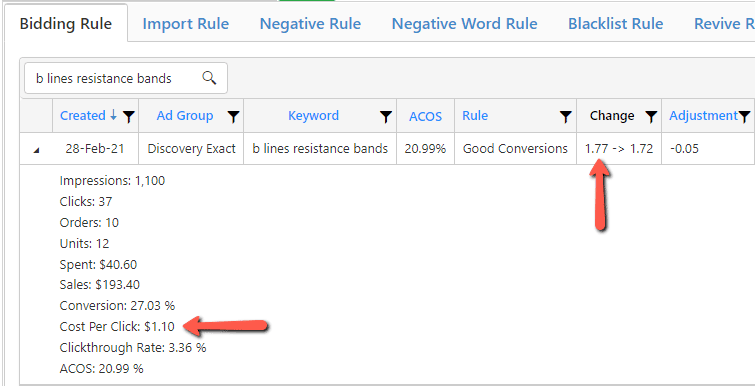
Your current keyword bid doesn't necessarily reflect how much you paid for clicks throughout the analysis period. Since aggregated ACOS includes historical performance, it may not accurately reflect how the keyword performs at its current bid.
For example:
- A keyword starts with a $2.50 bid.
- Scale Insights reduces the bid to $0.50 based on its calculated optimal bid.
- The average CPC across the analysis period remains at $2.00 because it includes clicks from when the bid was higher.
- The aggregated ACOS may remain above target due to earlier performance.
In this case, the current bid ($0.50) is lower than the average CPC ($2.00). If conversion performance improves and the calculated optimal bid increases, Scale Insights may gradually raise the bid—even while aggregated ACOS remains above target.
If the average CPC is lower than the current bid due to fluctuating conversions and historical performance, the current bid may be higher than the calculated optimal bid. As a result, Scale Insights may reduce the bid even when aggregated ACOS is below target.
Key Point
Don't assume that the current keyword bid is responsible for the aggregated ACOS. Since average CPC reflects historical click costs, it may differ from the current bid. Depending on conversion performance and the calculated optimal bid, Scale Insights may increase or reduce bids even when ACOS is above or below target.
How to Verify a Bid Adjustment
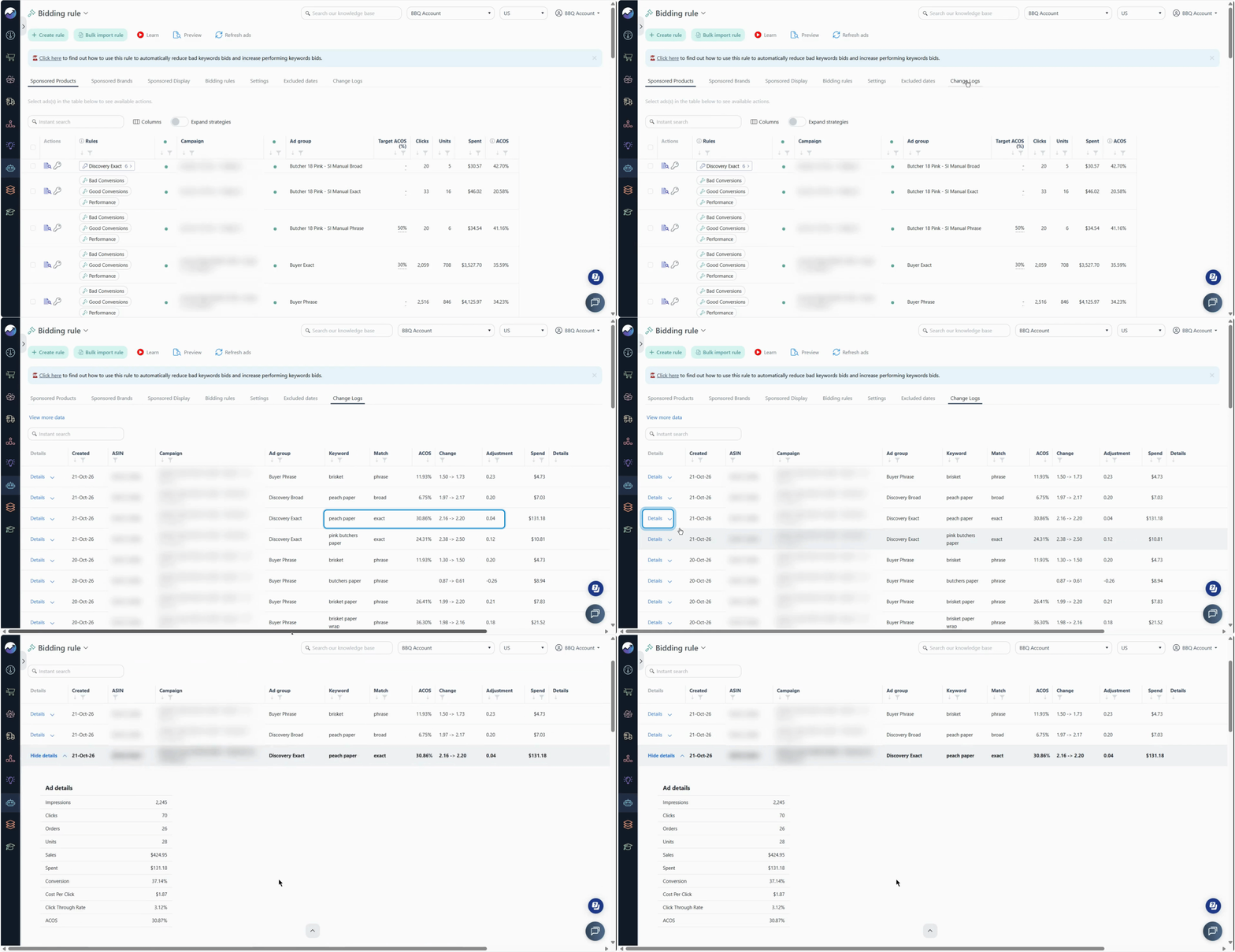
You can investigate the adjustment in Scale Insights:
- Navigate to Automation → Bidding Rule → Change Logs.
- Find the keyword whose bid unexpectedly increased or decreased.
- Expand the corresponding change-log entry.
-
Review the keyword's performance data and the calculated optimal bid to understand the adjustment.
This helps you understand whether historical click costs differ from the current bid. Review the conversion performance and other available metrics alongside these values to better understand the adjustment.
The Bottom Line
The Bidding Rule aims to move keyword bids toward their calculated optimal levels to achieve your target ACOS over time. Since historical performance, conversion rates, and click costs can change, bids may increase even when aggregated ACOS is above target.
If conversion performance remains consistent over the configured analysis period, the keyword's performance at its optimal bid should move toward the target ACOS. However, reaching the target isn't guaranteed if conversion rates or other performance factors continue to change.
What's Next
-
What Is the Bidding Rule? - Learn how Scale Insights adjusts keyword bids.
-
How to Calculate the Optimum Bid - Understand how the optimal bid is determined.