
Algorithms use a specific period of historical advertising data to evaluate performance and make optimization decisions. Two settings determine this period:
- Days of Recent Data to Ignore — determines how many of the most recent days are excluded from the analysis.
- Days to Analyze — determines how many days of historical data are analyzed.
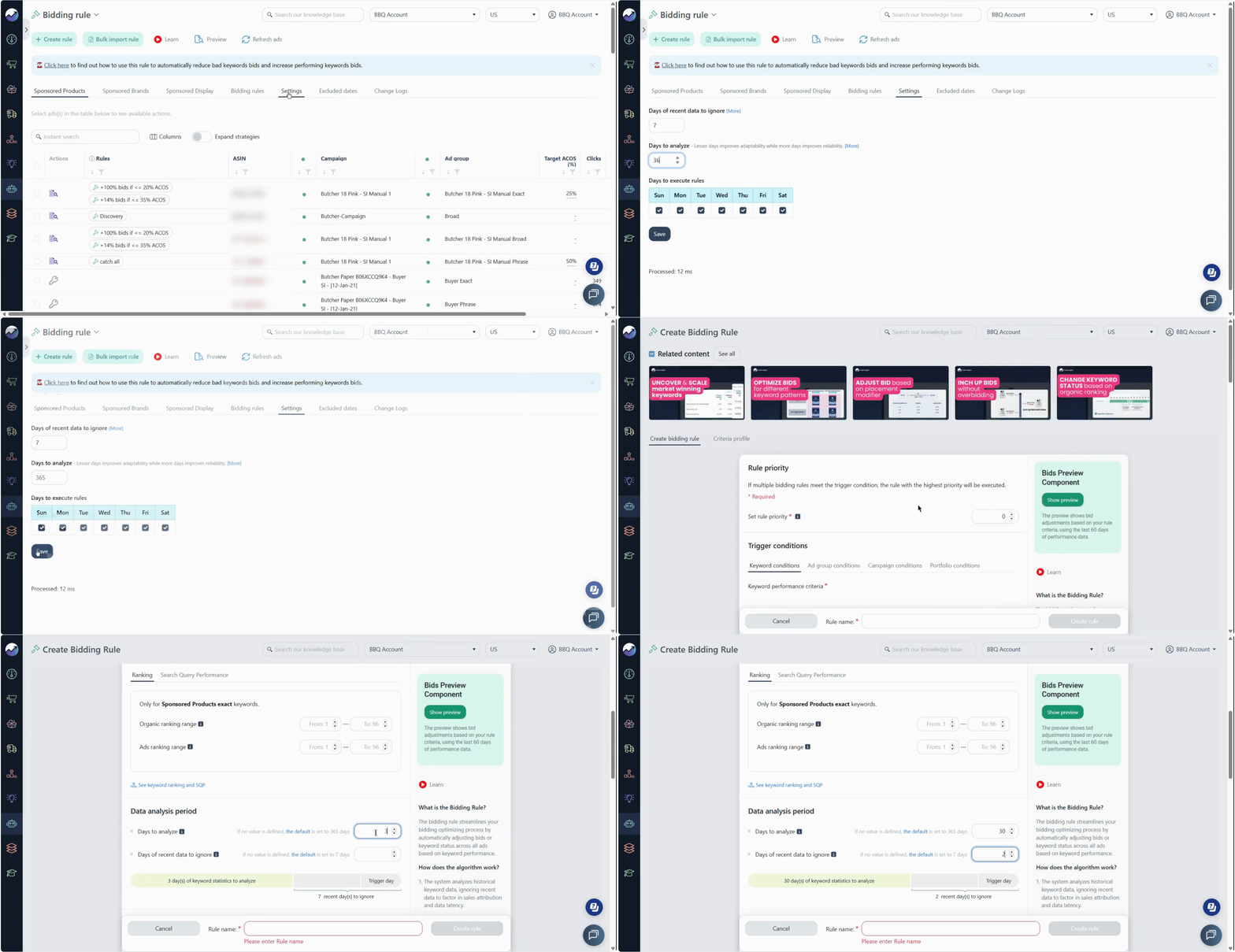
Together, these settings define the date range used by the algorithm.
Global vs Rule Setting
You can control how much historical data each algorithm uses when analyzing performance and applying rules.
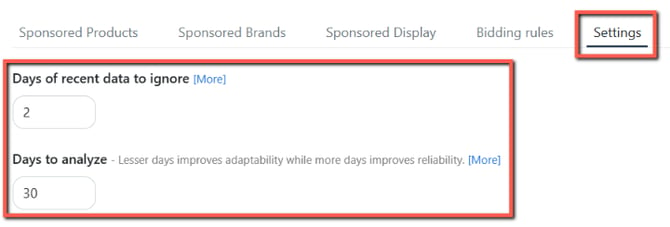
Global Settings
You can set the Days to Ignore and Days to Analyze in the Global Settings. These settings apply to all rules within the algorithm by default.
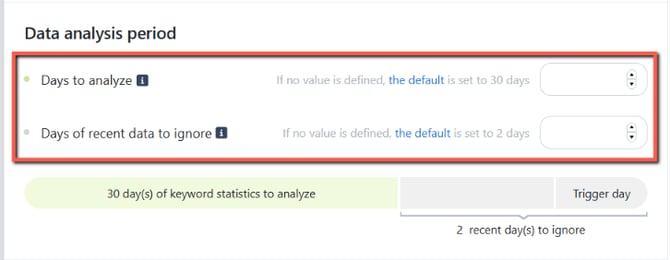
Rule-Specific Settings
For some algorithms, such as Bidding and Placement Rules, you can also configure rule-specific Days to Ignore and Days to Analyze. These settings apply only to the specific rule and override the Global Settings.
If no rule-specific settings are configured, the rule will follow the Global Settings.
How is the analysis period calculated?
The algorithm determines the analysis period in two steps:
- Days of Recent Data to Ignore determines the end date of the analysis period.
- Days to Analyze determines how many days of data are analyzed before that date.
Example
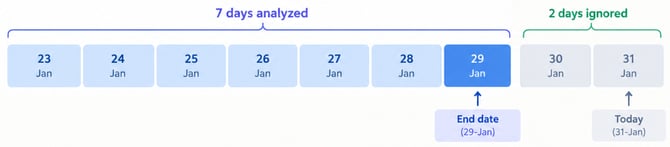
Suppose today is 31-Jan and your settings are:
- Days of Recent Data to Ignore: 2 days
- Days to Analyze: 7 days
The two most recent days, 30-Jan and 31-Jan, are excluded. The analysis ends on 29-Jan and covers the previous 7 days:
Available Days to Analyze
The available historical data period depends on the algorithm:
-
- Most algorithms: up to 180 days
- Bidding Rule: up to 365 days
Shorter analysis periods
A shorter analysis period gives more weight to recent performance and can make the algorithm more responsive to recent changes, such as:
- Bid changes
- Price changes
- Conversion changes
- Seasonal changes
A shorter period may be useful for higher-traffic accounts that generate enough data within a shorter timeframe.
Longer analysis periods
A longer analysis period gives the algorithm more historical data to evaluate performance.
This can help reduce the impact of short-term fluctuations or results based on very small amounts of data.
-
For example, a keyword that receives only one click and one conversion could show a 100% conversion rate, but that result may not represent its longer-term performance.
A longer period may therefore be useful for lower-traffic accounts that need more historical data for meaningful analysis.
Why exclude recent data?
Recent advertising and sales data may not yet be complete.
For example:
-
- A shopper may click an ad and make a purchase several days later, so the sale may be attributed after the original ad click.
- Advertising data can sometimes take time to become available.
When choosing this setting, consider sales attribution and data latency so that the algorithm has sufficiently complete data to evaluate performance.
Tip
A higher value excludes more recent data from the analysis, while a lower value allows the algorithm to respond to more recent performance.